
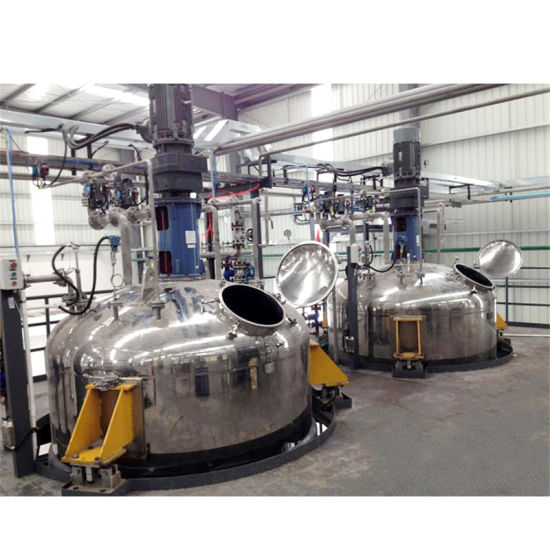
We are engaged in manufacturing quality range of Stainless Steel Mixing Tank in which chemical reaction takes place. Reaction Vessels are commonly used in Pharmaceutical, Chemical, Resin, Petrochemical, Adhesives, Dyes and Paint Industries. We offer high quality reaction vessel in different capacities ranging from 50 liters to 50,000 liters, Pressure Range : 10 to 20 kg/cm/g and Temp. Range up to 200 ºC
Reactor tank Reactor Vessels consist of a Cylindrical vertical shell with standard torospherical dish on both ends.
A jacket is provided on the Outside of the shell for Heating the reactor by passing steam or thermic Oil. or Cooling the reactor by passing cooling media. Stiffener Rings are provided on shell in between the shell and jacket to give uniform circulation of the heating or cooling media and to intensify the vessel.
Agitator assembly mounted on the Top dish of Reactor consists of Shaft supported by Lantern Assembly on the Top End containing Bearing Housing with Tapered roller bearing and Ball bearing to withstand impact load and vibratory load ensuring smooth rotation of the Shaft. Water cooled Stuffing box filled with gland rope pressed by Gland pusher is also provided.
On the other end of the shaft Blade is fitted of different types as per the need of the Process viz. Single Anchor, Double Anchor, Gate, Paddle, Flat or Curved Turbine & Propeller types. Baffles are also provided inside the shell as per the requirement.
Top Dish of the Reactor is provided with various Nozzles viz. Manhole, Light Glass, Sight glass, Vapour, Addition, Reflux, Thermowell etc.
Bottom Dish of the Reactor is provided with an Outlet nozzle where valve is fitted.
OUR INDUSTRIES
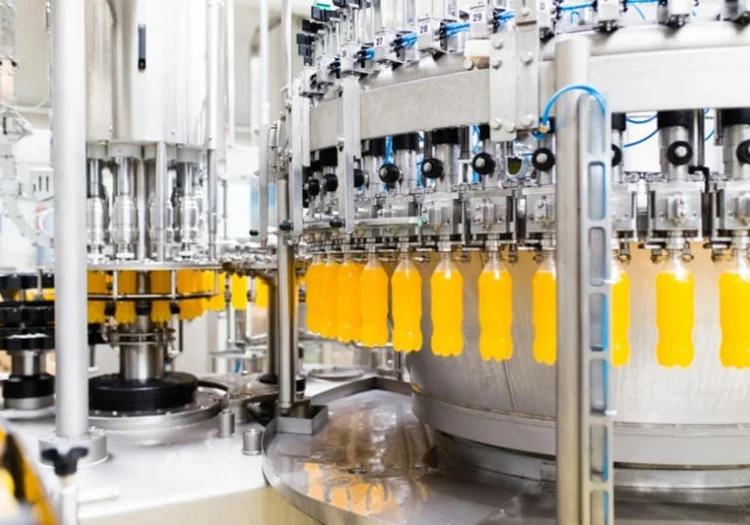
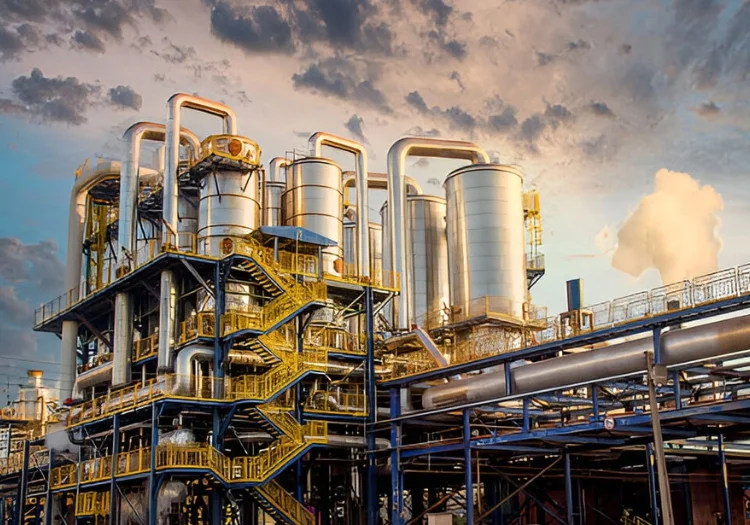
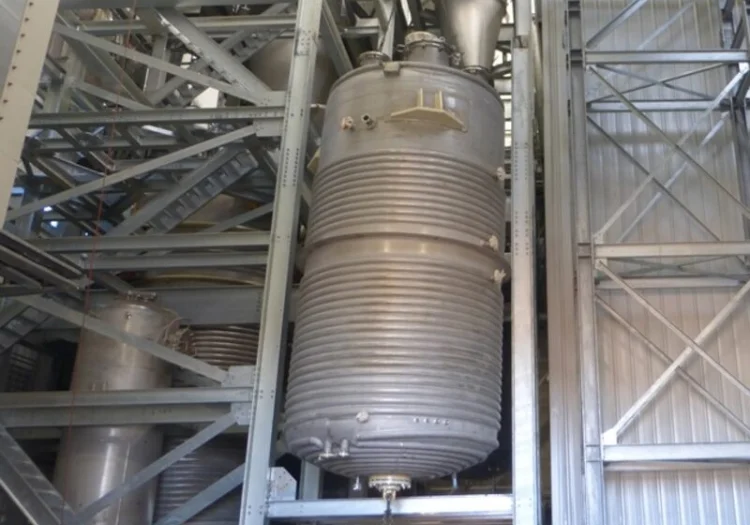
Stainless Steel mixing tank size:
1000l mixing tank
Types of 1000L mixing tanks
A 1000L mixing tank generally comes in two major types, namely, static mixing tanks and dynamic mixing tanks.
Static mixing tanks use stationary mixers to mix the substances inside them. They have several advantages. Firstly, they have lower maintenance costs than dynamic mixing tanks because their moving parts are fewer. Additionally, they're energy efficient and provide continuous mixing.
However, despite having lower maintenance costs, static mixing tanks sometimes require maintenance because of the buildup of deposits that can affect the quality of the mixture. Their mixing speed may also be slower.
In contrast, dynamic mixing tanks have pumps and agitators to mix the substances inside them. Generally, dynamic mixing tanks are more popular than static mixing tanks. One of the main advantages of dynamic mixing tanks is that they can mix quickly and thoroughly. Also, dynamic mixing tanks are versatile. They can adapt to different mixing tasks by changing the speed and shape of the agitator.
On the flip side, the advantages of dynamic mixing tanks don't stop at the versatility of the tanks. They also include energy efficiency, which is efficient in power consumption. Furthermore, while dynamic mixing tanks have more moving parts than static mixing tanks, they are still easy to maintain.
However, dynamic mixing tanks' disadvantages may be more energy consumption than static mixing tanks.
Specifications and Maintenance for 1000L Mixing Tanks
Specifications
The following table summarizes some key specifications about 1000L mixing tanks.
Capacity: 1000L mixing tanks can perform mixing operations with a volume up to 1000 liters. It may have an impact on the final products quantity.
Dimensions: The diameter and height of a 1000L mixing tank are usually around 1m and 1.26m respectively. These dimensions are just one example. The actual dimensions may vary based on specific designs and requirements.
Power: 1000L mixing tanks are usually equipped with electric motors, which provide the energy needed to drive the mixing operation.
The power of the motor determines the torque and speed it can deliver. Material: 1000L mixing tanks are often manufactured from SS304 or SS316L. The combination of material and surface treatment helps ensure the tank's resistance to corrosion and chemical reactions.
Design: 1000L mixing tanks often have specific designed structures, such as dispersion, vortex formation, and other designed forms, that help the mixing process or achieve particular effects.
Seals: 1000L mixing tanks need to prevent leakage to ensure product quality and operational safety. Therefore, seals, such as gaskets and seals, are also crucial components.
Maintenance
Regular cleaning: Regular cleaning is critical for the maintenance of mixing tanks. A 1000L mixing tank's size is relatively large, which means it has the potential to accumulate contamination. Therefore, it is important to adopt proper cleaning methods and materials to remove any residue and contaminants.
Inspection and repair: Inspect the tank body, fittings, seals, etc. of the 1000L mixing tank regularly to check for any signs of damage, leakage, or corrosion. Once problems are identified, promptly repair or replace the damaged parts to avoid the equipment's integrity and performance being compromised.
Maintain the drive system: In addition to cleaning and inspections, the maintenance task of a 1000L mixing tank also includes the upkeep of its drive system. This is achieved by regularly lubricating the bearings and other parts of the drive system, which can help them maintain good operational status and extend their service life.
Scenarios
A 1000L mixing tank can be applied in many industries because of its versatility. Here are some common usage scenarios:
Food Industry
In the food processing industry, massive 1000L mixing tanks are used to blend food ingredients, beverages, and dairy products. The tank can ensure food production on a large scale is efficient.
Chemical Manufacturing
In the chemical industry, a 1000L mixing tank is used to combine liquids, powder and gasses to produce a new chemical product. Some of these products may be paints, coatings, dyes, detergents and adhesives.
Pharmaceutical Industry
In the pharma industry, mixing tanks play an important role in the formation of drugs, vaccines and other medical products. The tank ensures precise formulations and uniform blending of ingredients with proper quality control.
Cosmetic and Personal Care Products
Mixing tanks are also used to produce personal care products like lotion, shampoo, hair dye and body creams. The tank helps to achieve a uniform blend with the right consistency.
Animal Feed Production
Mixing tanks are used in the process of making animal feeds. The tank helps to blend ingredients like grains, additives and nutrients uniformly.
Construction Industry
In the construction industry, mixing tanks are used to produce cement, mortars and other construction materials. The tank ensures uniform mixing and quality of the materials.
Biofuel Production
Mixing tanks are also used in the production of biofuels like ethanol and biodiesel. The 1000L tank blends feedstocks, additives and catalysts during the production process.
Cleaning Products Manufacturing
Mixing tanks are used to make cleaning products like detergents, bleach and sanitizers. The tank helps to achieve uniform blending and quality of the cleaning products.
How to choose 1000l mixing tanks
When purchasing industrial mixing tanks, it is important to consider things such as tank shape, the power of the mixing motor, whether the mixing tank has extra functions, and other features like safety, cleaning, and maintenance.
When it comes to the mixing tank's shape, buyers can choose between horizontal and vertical mixing tanks. Generally speaking, a vertical mixing tank will be more suitable for high-viscosity materials, while a horizontal mixing tank will be better for low-viscosity materials. Choose the tank shape that is suitable for the target material.
The mixing power should match the viscosity level of the liquid in the mixing tank. In addition to the mixing power, other parts of the mixing system, such as the shaft and agitator, should also be designed appropriately to ensure optimal performance for the target material.
Extra functions may improve the tank's overall performance. Some mixing tanks may come with heating or cooling elements that can control the temperature. Some of them have extra features like pressure control and vacuum functions.
Safety is always an important concern in machinery selection. Look for features in the mixing tank of substance leakage or overpressure protection. It's important to choose a mixing tank that has safety valves and pressure relief systems to minimize any risks during operation.
Cleaning and maintenance functions: Consider the assembly and cleaning functions of the mixing tank. 1000l mixing tanks may require frequent cleaning between batches. Thorough cleaning and maintenance can avoid cross-contamination and ensure product integrity.
Q&A
Q1: How long can food in a stainless steel mixing tank last while still fresh?
A1: According to research, food can last for three to four days if kept at 39 degrees Fahrenheit. However, the mixing tank must be an airtight tank that won't let in any bacteria. Also, food with lower acidity like meat, poultry, and seafood preserve better and longer. Regularly inspect the food in the mixing tank for any signs of spoilage, change, or bacterial growth.
Q2: What is the approximate weight of a 1000L mixing tank?
A2: The 1000L mixing tank has varying weights, depending on the material used to make it. For instance, an aluminium tank weighing 1000L will be lighter than a steel or, more specifically, stainless steel tank. Stainless steel is denser than aluminium. Moreover, the mixing tank could have extra features like valves, connectors, and agitators that could add weight. On average, a 1000L mixing tank weighs about 800 kgs. However, to get the exact weight, consult with the manufacturer.
Q3: Are there coatings in a stainless steel tank to make it last longer?
A3: Stainless steel is more durable than regular steel because it contains chromium, which inhibits oxidation and rust. However, to prolong the life of the tank, regular inspection is necessary to identify any signs of damage, such as nicks, scratches, or dents, which could make the tank vulnerable to corrosion. Moreover, if the tank gets damaged, remedy it promptly. Also, use high-quality stainless steel that offers better resistance to tank mixing corrosion.